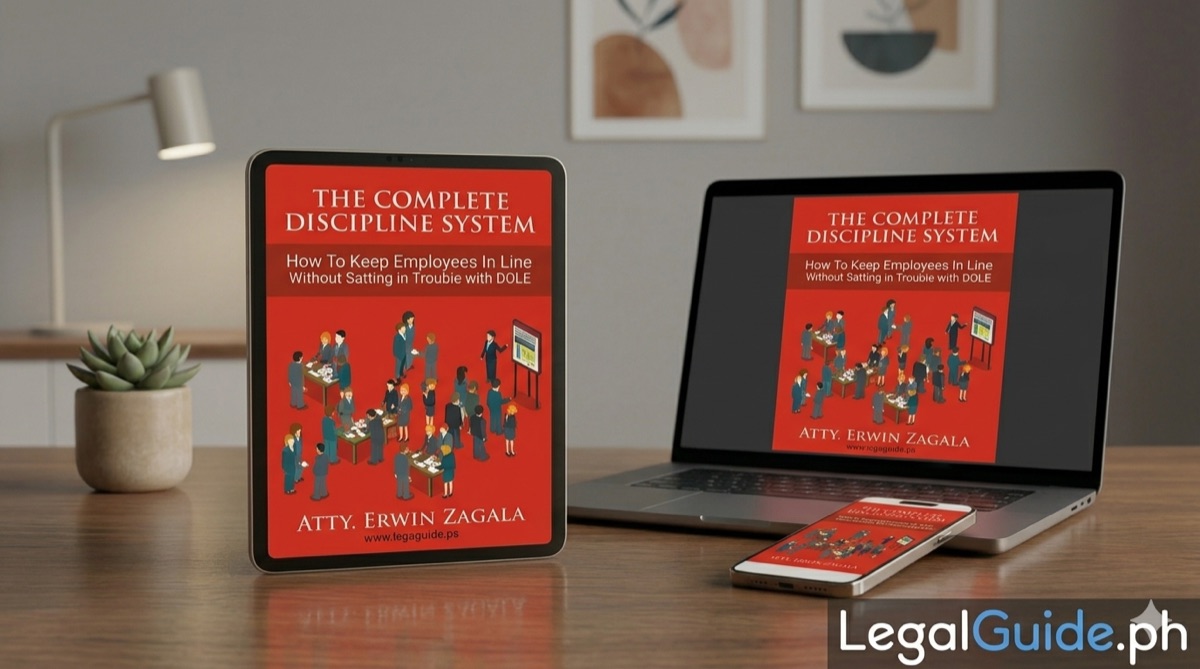
Johnny was the perfect manager. Ten years of service, no complaints, respected by his team. Then one of his most trusted employees started mishandling the company's petty cash. Over two years — ₱260,000 gone.
When Johnny tried to look into it, the employee went on AWOL. A few days later, a subpoena arrived from the NLRC. He was being accused of constructive dismissal.
“
After all the years of doing the right things — Johnny found himself as the villain in someone else's case.
This happens more often than you think. Not because managers are bad people — but because nobody taught them the rules. Good bosses, caught off guard by a system they never understood, pay the price while erring employees walk free.
This book changes that.
The Reality on the Ground
Does Any of This Sound Like You?
If you're managing people in the Philippines, you've likely faced these challenges.
01
The Most Common Trap
Too Soft to Confront
You know something's wrong but pakikisama stops you from saying anything. You hope it resolves itself — it never does.
Too Hard and Reactive
You blow up, issue ultimatums, or let things slide until you snap. Neither extreme is sustainable — and both expose you to legal risk.
02
03
No Procedure in Place
You've never heard of a Notice to Explain. You don't know what 'due process' means in practice. You're improvising — and that's dangerous.
Afraid of the NLRC
You've heard horror stories of employers losing cases even when the employee was clearly guilty. You're afraid that's about to happen to you.
04
05
No Documentation Trail
When incidents happen, nothing gets written down. Without paper, you have no case — even if you're 100% in the right.
Don't Know Where to Start
The Labor Code feels like a foreign language. You don't know what you're allowed to do, what you're required to do, or what will get you in trouble.
06
What's Inside
A Complete System — Start to Finish
Not theory. A practical, step-by-step framework covering every stage of employee discipline.
01
Part 1
Part 1 — Laying The Foundations
Why Filipino managers struggle with discipline (too soft or too hard), the legal handicap the law gives employees, and the two non-negotiable pillars of every discipline case: Substantive Due Process and Procedural Due Process. Get these wrong and you pay — even if the employee was guilty.
02
Part 2
Part 2 — Before Violations Happen
How to use your Management Prerogative to draw clear lines — rules, policies, and company codes of conduct. What the law says you can and cannot regulate. Why getting this right is the single most important thing you can do before anyone ever breaks a rule.
03
Part 3
Part 3 — When a Violation Happens: Investigate
How to play CSI in your own workplace: gathering facts, interviewing witnesses, and building a solid paper trail. What counts as evidence, how to document it properly, and how to avoid the most common investigation mistakes.
04
Part 4
Part 4 — Keeping the Peace While You Investigate
Can you suspend an employee while the case is ongoing? What are your options when you need to remove someone from the workplace temporarily without violating their rights? The legal way to handle this sensitive stage.
05
Part 5
Part 5 — The Notice to Explain, Done Right
How to write a proper Notice to Explain (NTE) — what to include, what language to use, and how to serve it correctly. This is where most employers fall apart. A defective NTE can torpedo an otherwise airtight case.
06
Part 6
Part 6 — The Administrative Hearing
What actually happens in a hearing. How to run it properly, what questions to ask, and how to handle difficult scenarios — including when the employee refuses to show up, denies everything, or shows up with a union rep.
07
Part 7
Part 7 — Calibrating and Delivering the Penalty
How to determine the right penalty for the violation — the aggravating and mitigating factors that matter legally. How to write the Notice of Decision. And the one step most employers forget that can unravel everything at the finish line.
★
★BONUS
Bonus
Bonus — What Happens After: NLRC, Mediation, and Appeals
If the employee files a case, what does that process look like? From SENA mediation to Labor Arbiter arbitration, position papers to the Court of Appeals — a plain-language map of the entire dispute resolution system.
The Discipline System
One System. Three Principles.
The Complete Discipline System is built around three characteristics that protect you — legally and operationally.
01
Fair
The system is a mirror. It reflects back what is appropriate to the situation. The end goal: when the process is done, the employee themselves will agree that the result was well-deserved. Everything is objective, evidence-based, and verifiable.
02
Consistent
The system is a recipe. No matter who runs the process, it produces the same result. Templates and predetermined steps prevent overreaction and protect you from making bad choices under pressure. It becomes second nature.
03
Automated
The system is a machine. It doesn't take things personally. It applies the same rules regardless of who is involved. Employees cannot claim favoritism or singling-out — because the process speaks for itself.
Honest Fit Check
This Book Is For You If…
01
THIS IS FOR YOU:
You're a manager, supervisor, or team lead handling people
You're a business owner with employees to manage
You've never received formal HR or labor law training
You've been too soft — or too hard — and you know it
You want to discipline properly without getting an NLRC case
You work in the Philippines and operate under Philippine labor law
02
THIS IS NOT FOR YOU:
Lawyers looking for a legal textbook or case annotations
HR practitioners seeking purely academic reference material
Employers based outside the Philippines
Anyone who thinks they already have it all figured out
Z
THE AUTHOR
Atty. Erwin Zagala
Founder, LegalGuide.ph
Atty. Erwin Zagala is a Philippine labor lawyer and the founder of LegalGuide.ph — a platform dedicated to making Philippine law accessible to managers, business owners, and everyday Filipinos.
He has worked with companies ranging from family-owned SMEs to large manufacturing firms, helping their teams build proper HR and discipline systems that hold up in court. He has also conducted live workshops and seminars on employee discipline across the country.
“
His approach: plain language, real stories, and no unnecessary jargon. Because legal knowledge should not be locked behind a law degree.
Get Instant Access
The Complete Discipline System
One payment. Lifetime access. Immediate download.
FULL EBOOK — DIGITAL EDITION
₱997
PDF + Bonus Materials
What's Included:
The Complete Discipline System — full ebook (PDF)
The Discipline Framework — printable reference card
How to draft a Notice to Explain video workshop (worth ₱2,500)
Not at all. The book was specifically written for non-lawyers — managers, supervisors, and business owners. Legal concepts are explained using plain language, Filipino analogies, and real workplace stories.
02
Yes, 100%. The book is grounded in the Philippine Labor Code, Supreme Court decisions, and DOLE regulations. Every concept is explained within the Philippine context.
03
No. The book provides legal information — a map to help you understand the terrain. For advice specific to your situation, consulting a lawyer directly is always the best course of action. That said, this book will make you a much more informed and prepared client.
04
Yes. Most HR practitioners in SMEs learn discipline procedures on the job without formal legal training. This book fills that gap — and gives business owners the knowledge to verify whether their HR team is doing it right.
05
The book is delivered as a PDF immediately after purchase. Bonus templates are included as separate files.
06
Readers can reach out via legalguide.ph/laborbookbuyer or email attyzag@legalguide.ph. Atty. Erwin is committed to supporting readers beyond the book.
997
Your Last Chance to Decide
Stop Running Your Team on Guesswork and Fear.
Learn the system. Follow the process. Protect your business.